Art has become one of the most versatile and commonly used words used to describe forms of aesthetic appeal. It’s associated with things that are aligned, unaligned, proportionate, skewed, beautiful, and even disturbing; all of these traits aside, art has one definitive aspect: effectiveness. The goal is to make an impression, describe something that cannot be communicated in any other way, make the audience feel something incredible, and discover something new. Some have argued that art is an accident ordained by the Gods using the hand of mortals, others toil feverishly to perfect every last inch of whatever piece they have created, leaving no room for debate or Godly help; either way the “effectiveness” is there, taking just as many forms as it always did, and grasping just as many minds. So there in lays the newest, ancient, issue argued by artists, theorists and philosophers alike: Has technology tainted or enlightened art as a whole? Since art is an ambiguous term, the issue will prove to be a long standing and well established debate between knowledgeable, credible individuals.
Photography is an interesting form of artistic expression because of its vast difference from what most would call “fine art.” Photography began in the 1820’s with the very first photograph being taken by Niépce, who joined forces with Louis Daguerre in developing the details of their project, entitled, the “Daguerreotype.”
Some people found the technology fascinating and as an opportunity to seize their chunk of a new innovation, since this new process of creating still life, long lasting images of things required no skill in drawing or painting. But, others with already existing artistic skills found the Daguerreotype threatening, and lacking of a true creative nature. Somehow, in between an exact portrait and an exact photograph, art found a home over, under and through both of these mediums. There is no debate today, for photography has established itself as a worthy form of artistic expression; effective no less than a painting or a sculpture.
Can Digital Photography be…Photography?
Most people became instantly enthralled with the idea of a Digital Camera because being able to see the picture before you take it is really “cool.” Let’s face it, humans are gluttons to the technology industry, biting off more than we can chew and chewing more than we can taste. But, photographers think of Digital Photography in a very different way. Just as portrait painters thought back in 1826: Will this new invention end my career as an artist?
Out of the Dark room and into the light?
The discussion is not whether or not Digital cameras should replace film; that is typically a matter of preference and purpose. Digital photography brings up issues that are far more enduring, issues that are not as simple to resolve. With Digital Photography, the concept of a true dark room is eliminated, and in its place: photo manipulation software. Whether you’re an amateur and you use the free photo suite program thrown in with your camera, or whether you’re a pro who use the latest most comprehensive techniques; there is no contest that the Digital tools allow more control over the final product.
This is considered a good thing, right? From an onlookers stand point, yes it is. But for an artist who specializes in the dark room and the techniques of film photography, these new innovations might prove to eliminate the essence of one’s specialization.
The art of photography relies heavily on the element of surprise, spontaneity, and sometimes even accident. Within a photo lies one single instance, possibly only existing for the one hundredth of a second that it took the camera to flash over the scene. Any experienced photographer will tell you that it is important to take as many pictures as possible to hopefully find that beautiful gem of a moment surrounded by other similar, but ordinary seconds of time. Digital technology now allows complete control over those sacred moments, and even opportunity to edit the photograph afterwards, possibly creating these moments, virtually. Has the accident of photography been one up-ed? Or has the true livelihood of photography been demolished and in its place something, too new?
Digital art and photography seem to be the reincarnation of what portrait painting was to original photography. In it lays a new sense of control and exact ability; much more like the control of paint on canvas, but much less like the well established medium, photography.
But, even paint on canvas can be controlled digitally. Using common illustration software such as creol draw, adobe illustrator, Maya, and many more, you can actually paint an entire oil painting using only an electronic pen hooked up to a pad. When things like painting and photography seem to define the entire realm of the art industry, the idea of a Digital tool doing these things more efficiently seems awfully overwhelming for a fine artist. So, herein lies the problem. As I said, this will be a long standing and worthy debate, but never effectual enough to take the true effect from any medium or form of art.
It is safe to say that art is not a win lose game, where one medium has the ability to “beat” another. No matter how similar Digital Photography and Photography seem to be, they are very different in their approaches and in their final outcome. Today, comparing a Portrait to a photograph is like comparing apples to oranges. They may look similar, but they taste, feel, are something very, very different. Art is a matter of expression, and there are infinite numbers of ways to express.
When art is approached in a different way, it is only progress; art is timeless and doesn’t fade away with the latest trend. It has been proven through the ages that art will change, and new styles of artistic expression only enhance the industry as a whole. The camera did not eliminate realistic painting, and technology will not eliminate the traditions of fine art.
Wednesday, March 16, 2011
A Brief Evolution of Art and the Influence of Technology on Photography

Annual Art Contests for Kids
One good way to encourage your child to develop their imaginations and to get them away from the television is to have them enter an art contest. There are many different types of art contests that are designed for kids. Most will revolve around creating a poster for a themed event, or creating some sort of narrative art that teaches a lesson as well as entertains. To find these contests you will want to look for annual contests and for new campaigns offered by federal and state agencies as well as nonprofit organizations.
Children’s Art Contest Number One – The Annual Tar Wars National Poster Contest
The Tar Wars National Poster Contest is an annual art competition for kids. To qualify for this competition the child needs to be in the fourth or fifth grade, they must have had the Tar Wars presentation given to them in school, they must create a poster based on this year’s theme, and they must submit their entry by their state’s deadline. If you are a teacher and would like your class to participate in this anti-tobacco art competition you can contact your state representative to get the materials needed. To find the contact information for your state’s Tar Wars representative you will need to go to the Tar Wars homepage located at http://www.tarwars.org/poster.exml. Art work will be judged on creativity, originality, interpretation of the anti-tobacco theme, and the clear and positive message that it depicts. Posters will need to be between 9 inches by 12 inches and 22 inches by 28 inches, and they must use two dimensional art mediums only. The deadlines for entries will vary, however, mid April is a good estimate. Posters that win at the state level will be entered in the national competition held in May.
Children’s Art Contest Number Two – Youth Wildlife Art Contest
If your child is interested in hunting or wildlife then they may be interested in entering the National Rifle Associations Youth Wildlife Art Contest. This is an annual event that accepts entries from kids in grades one through 12. Students can attend private, public, or home schools and still be eligible for this contest. The deadline for entries is the beginning of October with the 2006 deadline being October 3. There are four age categories for prizes. Category I will be for 1st through 3rd graders, category II for 4th through 6th graders, Category III for 7th and 9th graders, and Category IV for 10th through 12th graders. Several cash prizes will be awarded in each category.
Students are only allowed to submit one entry. The artwork can use any two dimension art medium, as long as it is on an 8 ½ inch by 11 inch paper, or on an 11 inch by 14 inch paper. You don’ need to mat the art but you can if you want. Art work will be judged on its composition, realism, creativity, and effort. For more information about this competition you can visit the following website: http://www.nrahq.org/youth/wildlife.asp.
Children’s Art Contest Number Three – Annual Arbor Day National Poster Contest
The National Arbor Day Foundation is another organization that hosts an annual poster contest intended to inspire children. This competition is open to fifth graders across the national and last year more than 75,000 fifth graders participated in this event. If you are a teacher or a home school teacher and you want your class or child to participate in this event you can request a free Activity Guide for this year’s poster contest from http://www.arborday.org/kids/postercontest. This free guide will include lesson plans that center on the importance of tress, and they will include lessons for the following subjects: art, geography, social studies, and national science. Prizes for this contest include Savings Bonds, awards, teacher prizes, and a trip to Nebraska City, Nebraska for the awards ceremony. For more information about this contest please visit the National Arbor Day Foundation’s website.
How to Do Pinhole Art

credit
Pinhole art is not something you commonly see but the creations are beautiful and very easy to make. There are several different techniques and many different ways to display the pinhole art. One technique is to use a coloring page as your guide. Simply lay the page on top of the new paper then place them on a piece of cardboard. Use a pin or needle to poke holes, every quarter-inch or so. A large pin, like a hat pin, is perfect. It helps to tape the paper and pattern to the cardboard to make sure the pages don't slip. Upon covering the entire design with pinholes you can tape it to a window or a picture frame with no backing.
Another way to make the design is to use stencils. Draw the entire design on to the fabric or paper with a disappearing marker, found in sewing departments. The marker's color will last for about 72 hours then disappear for good. This allows enough time to make the pinhole arrangements before allowing the pattern to disappear.
The disappearing ink markers are perfect for making intricate designs from a poster or large picture. Make dots with the marker, spaced evenly, then go back and poke a hole in each dot. The picture is then outlined for display.
Some people prefer to keep the original picture rather than having it disappear. During certain conditions only the picture can be seen, not the pinholes. In other conditions, the pinhole art will show rather than the original picture.
Any number of things can be your pattern maker. Calendars, postcards, wallpaper, and posters all make great patterns. And, the pattern doesn't have to be done on paper only. You can make pinhole art on cloth, cardboard, foil or poster board.
Pinhole art requires no colors, markers, or paints but does require a light source that will shine through the pinholes to form the design. Windows are a perfect place to display your pin art because the light will shine through yet bright sunlight will be filtered through the artwork.
Besides windows you can also display the artwork in a picture frame that has no backing. Make the design on a dark piece of felt, then place a single light behind the art. A bulb, made to look like a candle, is the perfect way to shine light through your artwork. The candle bulbs can be found around Christmastime in stores that sell Christmas decorations. You can also burn a tea light behind the picture.
For denser materials, like felt, try using a nail rather than a pin to make the holes. Be careful not to tear the fabric when inserting the nail. You'll find many creations that you can easily do by looking around your home for things to make the patterns and finding places to hang the artwork.
Friday, March 4, 2011
Novel Baby Gift Ideas for the New Mom or Parent to Be

celtics baby clothes
Anyone who has ever shopped for a baby gift - whether aimed at the child itself or to either or both new Mom and Dad - knows how tough it can be to get a present that 15 other people have not already given. Most of us, too, have had to buy for a mom or parents that we don't even know all that well, making a tough purchase that much harder to get right.
That's not to say that traditional baby gifts aren't very much appreciated. Every parent knows all too well that they can never have enough disposal diapers and extra blankets and towels always get used. One too many baby books or silver spoons, however, cry out for store return.
Also, it can be extraordinarily satisfying when you're able to present a gift that is a particularly good value for you as the giver while also being something the recipient(s) will truly appreciate. Add to this the delightful buzz you get when you give something the recipients brags about for months to come, and it can become worth your time to invest some creativity into the process.
But before you buy anything, it helps if you can determine if there is anything the recipient really needs. All too often, many expectant parents do a large amount of shopping - or getting hand-me-downs from family and friends - but they may arrive at the delivery room realizing they have no baby bottles or formula or even the all-vital crib or carseat. Always try to go for parental need over almost any other type of gift.
Once you discover they're fairly well set for necessities, stop and think about what you do know about the expectant mom or parents. A gift that the dad can enjoy equally with the mom is a big plus; men frequently get forgotten at baby gifting time even though they're essential to the process.
Consider some of these ideas for unique, incredibly useful, and/or much appreciated baby gift offerings, grouped by expense categories that include budget, moderate and higher end. But don't forget that you can afford a more expensive gift if you get a few people also planning to buy a gift to go in together with you. It's a great way to get something nicer without breaking your bank account and eliminating the problem for several gift givers at once.
Budget:
A special ornament for the child's first Christmas or other holiday
Combine a smaller practical gift like baby bottles or a blanket with one or two prepared meals to help the new parents get through the first hectic week with the newborn
Start a tree or plant in advance and then, when large enough, place in a nice pot to give the new parents with a little poem or salutation that emphasizes the new life of your gift as well as their child
Put together a keepsake box you decorate or appoint yourself that you can start for the new parents before you present it; a crafts store will have just about everything you need
Buy copies of newspapers or visit the newspapers online and then print a copy of some of the biggest news stories on the day the child is born. Once you have them, assemble the clippings into a scrapbook with the birth date and name of the child listed on the front
Put together a book or portfolio of pictures that document the months before the baby arrives which can become a great keepsake for both parents and the child
RedEnvelope.com and several other shops offer different versions of a baby care kit which includes a comb, a tiny brush, medicine spoon, teether, and other much-needed accessories that new parents don't always have when the child first comes home; for a little bit more, you can usually put one of these kits together yourself, personalized for the specific needs of the parents and child
Use your computer and printer and desktop publishing software to create an artsy or cute booklet of coupons for "services" the new mom or parents can redeem. Here are some suggestions for coupons:
-Three or four coupons for an evening or weekend day of babysitting
- Volunteer to grocery shop or pick up the dry cleaning
- Offer a home made dinner or a drop-off breakfast or lunch
- Offer to return unwanted baby gifts and/or help with thank you notes
- If the new family has not finished their baby room, volunteer to paint or wallpaper or wax the floors
- Offer a morning of house cleaning, rug shampooing, or garage organizing
- Volunteer to groom the family dog when the pet gets a little too dirty to be around the baby
Moderate:
A book store gift certificate (new parents often want to buy books or tapes to learn more about parenting)
A tree or plant or stepping stone that can be placed in the garden or elsewhere in the yard to commemorate the new addition to the family
An assortment of pillows suitable for use with a baby to protect them on a bed or keep them in one place on the floor
A duo or trio of beautiful picture frames that would be great to use with some of the baby pictures; you can find some great buys in used furniture shops that can clean up well
A roomy lap blanket that Mom, Dad and Baby can use as they curl up on the sofa together
A basket of easy to prepare foodstuffs and snacks to help the parents out when they can't get dinner because the baby is fussing
Buy a great carry-all that you fill with great take-along items like baby wipes, diapers, baby lotion, energy snack bars for the parents, and more
Higher End:
A week of prepared, possibly frozen meals that can be reheated
A basket of high energy snacks
A gift certificate for a professional photography session for a baby portrait
Prepaid cell phone for the new parent without one
A super easy digital camera they can dedicate to baby pictures
Scour used furniture shops for a decent rocking chair that can be cleaned up into a beautiful, vintage gift
A gift certificate for an hour of massage, a session at a day spa, or a nice dinner out
Sunday, February 27, 2011
Digital Photography Home-Business Opportunities

Photo Credit: celtics baby clothes
For the next seven years, digital photography is forecasted to remain steady as a job opportunity for those that are interested in this field. While the competition is expected be strong amongst photographers and the demand for jobs will fall below the number of photographers there are expected to emerge in this field.
The most successful photographers exhibit traits in being creative, able to adapt rapidly to technology changes, and management proficiency. There are digital photography business courses available to help you gain the competitive edge. You will be able to start your own full or part-time business when you develop a good business sens and keep up-to-date on the rapidly changing technology.
There are many areas that you can pursue in a digital photography home business. I will cover a few of the areas for digital photography businesses.
Real Estate
Each year there are millions of homes sold in the US and real estate agents use at least one picture to advertise the property online, in magazines, in brochures, and in newspapers. As a digital photographer you could earn $50 to $100 a house working with real estate agents or others involved in real estate.
Portraits
There are many locations that you can use for a photo shoot. Many people like to have a professional portrait done of themselves for various reasons. The common charge for a shoot is $100 per hour and an additional $50 to $100 for prints and enlargements. There is also a strong demand for pet and children's portraits.
Sports
Being a photographer for sporting events can be profitable and exhilarating. As a sports photographer, you can submit your photos to event organizations, to participants and publications, local news agencies, and a variety of other types of news and sporting sites. The local minor league teams could pay $50 to $200 for team photos with extra sales potential for prints, premium items such as photo trading cards, T-shirts, and reprint. Do not forget your local school teams either as there is a hidden potential for a photo shoot for these teams.
Commercials
Every year there are billions of dollars spent on product advertisements. Commercial photography is normally limited to the more experienced photographers who can charges as much as $2,500 a day for high end product shots. There is also an opportunity for those that can also do shoots for the local chamber of commerce for their websites, local businesses for websites, and a wide array of other ways to earn as a commercial photographer.
Glamour
There are many beauty salons, hair dressers, and modeling agencies that use photos to help promote their services and products. While it is not uncommon for them to pay more than $150 an hour for promotional shoots with images that can be used for brochures, online advertising, point of sale materials, and business cards. There is an opportunity for those that wish to have photos of their staff and customers photographed for in house promotions or for conventions.
Stock Photography
There are agencies that specialize in stock photos that they resell to business for promotional purposes. For you to have your work listed with them they normally require a minimum submission of 300 to 500 photographs. As a stock photographer you can submit photos such as travel photos, landscape, people, animals, still life, and various other types of images that will appeal to their customers. The commissions for stock photographers can range from $5 to $100 for images that their customers purchase through their agencies.
News and Events
Many local newspapers, magazines, and newscasts often look for interesting human interest stories and pictures. The requirements for each of the types of periodicals will vary, but it is possible to have your pictures published, receive credit as a tag line, and possibly a payment for your photo.
Wedding Photography
There are photographers who will establish a wedding package of 25 to 40 prints that will retail for $1,500 to $3000. Normally this a type of shoot will take two days to work, the first day is to shoot the event and the second day is to process and prepare the album.
Graduation
There are parents who wish to have a professional photograph took of their graduate walking down the aisle and across the stage at graduation. The charges for photos could range from $5 to $10.
Photography Tips and Tricks
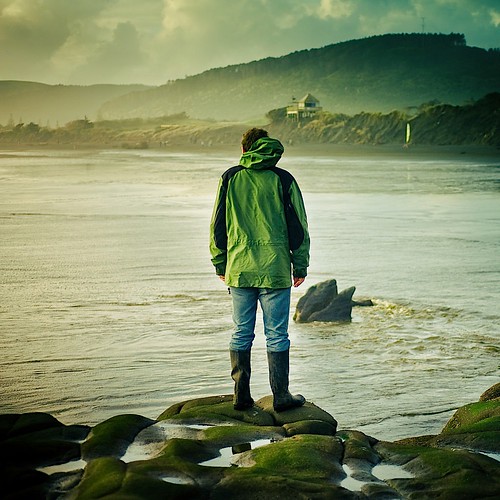
photo source
Photography isn't just about making memories, it's about art. Be artistic. Here are a few tips and tricks to help you make those photos, picture perfect.
To make those dull photos turn into works of art, consider these questions:
Decide if you want the full subject, half, or even a close up. How much background do you want, or even foreground? Exactly how close do you want that close up? What details do you want to focus on? Do you want a vertical, horizontal, or tilted photograph? What angle do you want? What's the best lighting? What background do you want to use?
1. Placing the subject of interest. Choose how much of the subject you want photographed. (Example: you want full body, half body, or face shot.) If your subject fills the frame then it's okay to center it. If you are trying to get more of the background, try placing your subject to the right or left in the viewfinder. With a horizontal (laying down), try to place them at the top for more foreground, or at the bottom for more background. And you could even tilt the camera for a more funky picture. It all depends on what part of the scenery you want visible in the picture. Maybe you want that tree to your left and your subject to the right. Or the patch of flowers in front and the mountains in back. (I find it best to take my time and take shots of each possible way and several different poses. This way I know I'll find the best photograph with the most potential.)
2. Don't center. The circle, plus sign, or brackets in the middle of your viewfinder is for focusing and isn't necessarily for centering the subject. Placing your subject in t he circle could leave you with a lot of empty and useless space on your photograph. Too much background and not enough subject. If your subject fills the frame then it is okay to center them. (Sometimes you just have to ignore the focus points and concentrate on your subjects placement in the frame instead.)
3. Camera angles. Walk around the subject, shoot from all angles and sides. This will help you to get the best lighting, background, and different aspects of the subject. You will want to find the best angle for all three. Pick a background that will not distract your viewers from the subject of interest. (I choose my backgrounds to where there's not much clutter. Sometimes I will use a plain sheet or blanket and place it behind the subject, but making sure it does not clash or blend.)
4. Reflectors. In some situations you just can't get enough light or you perhaps you just want more. To use a light reflector, place it in a position where it reflects light onto the subject without it getting in the frame. Use this if your shot is coming out too dark or there are too many shadows. On night shots that you need more than your flash can put out, place a lamp (or several) near your subject, but out of sight, and use the light reflectors to bounce from the lamps to where needed. (Some homemade light reflectors can be real cheap to make. You could use white cardboard, or if you can't find this, then simply take any piece and paint it white. For more light, place tin foil over your piece of cardboard, smooth it out, and reflect where needed.)
5. Shading. Using the same piece of cardboard as mentioned above, you can use this to block the light as well. You could make this easier by painting one side white and the other black. Or just place the piece in front of the lamp or sun to dismiss light from your subject. On most cameras you can use a sunshade for the lens, some cameras come with this, some you buy separate. This won't keep light from your subject, but it will block the light from causing a flare effect on the outcome of your photograph. The sunshade just clicks into place around your lens, and keeps the lens safe from any glaring.
6. Outside daylight. Direct sunlight is when you place the sun behind the camera, but in front of the subject. Using direct sunlight can cause shadows on the subjects face and possibly their eyes squinting. Back light is when the sun is behind the subject and in front of the camera. This will lighten the photo and cause much softer features on the subject.
7. Preventing red eye. Red eye is caused when the flash is too close to the lens. Ways to prevent this are: Attach a larger flash to your camera, t his way the flash is further from the lens. Or if buying a camera, look for one with the flash located far from the lens. Try getting closer to your subject when needing the flash. (Before I bought my camera with built in red eye correction, I had to use a photo editing program to correct these problems. I was even scanning my pictures and still having to edit when I was using my film camera that was hopeless against red eye.)
Saturday, February 26, 2011
Blair Hill Photography in Salt Lake City, Utah

credit,photo source
Blair Hill Photography services the Wasatch Valley areas locating between Provo to Logan Utah.
Blair Hill Photography began in the year 2000 when Blair first decided she wanted to use her camera for something other than fun. Though Blair had been taking photographs for a long time, and was very familiar with the SLR camera she owned, she was always just snapping photographs of family & friend adventures, music events, or other various events around the town. She had been published several times in her local newspaper and other various sources, but still never quite thought of the idea to go 'professional.'
When Blair decided that it was time to put her passion to work, she started to attend classes right away on her new favorite subject, so that she could learn as much as she could aside from what she already knew. She attended classes at her local community college, a local arts program, and MICA - Maryland Institute College of Art. She began developing her progressing in the field of musical/industrial photography, and developed a clientel very quickly.
To the downside of all the progress Blair had made with her work, in 2003 she moved 2000 miles across the county, which means her clients were not locals anymore. Discouraged, and looking for a refreshing moment in life, Blair took a break from her passion of photography until 2005. In 2005, Blair realized how much she missed doing what she loved most, taking pictures. She realized how much her focus of photography had changed though, and began to pursue portrait photography.
Since 2005, Blair has been an active portrait photographer in the greater Wasatch Valley in Utah. She has been complemented again and again on her wonderful work, with a repeat clientel that simply keeps growing and growing.
With astonishing photography, incomparable to any of the other local photographers here in Utah, yet still with the most amazingly affordable prices, Blair Hill Photography is completely unique, and perfect. Every day Blair is coming up with new ideas on how to make her work different, better. She is constantly attending trainings and schooling to further her educational background in photography, and to learn anything new she could possibly learn.
Her current creditinals include the following:
Anne Arundel Community College - 2001, Photography Certificate
Maryland Institute College of Art - 2002-2003 Photography Classes
Salt Lake Community College - 2006-current A.A. Photography Classes
In addition to her passion of photography, Blair has a B.S. In sociology from the University of Utah, and is currently working towards her masters in Gerontology. She hopes to one day mix her love for people and culture with her love and passion for photography.
To see Blairs work, please visit Blair Hill Photography by Clicking Here.