Sunday, February 27, 2011

Digital Photography Home-Business Opportunities


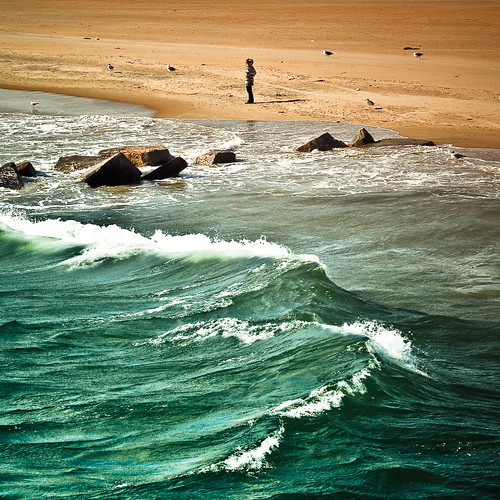
Blue Sky - Photography by John Gilchrist - The Sky Hook by John Gilchrist


Photo Credit: celtics baby clothes


For the next seven years, digital photography is forecasted to remain steady as a job opportunity for those that are interested in this field. While the competition is expected be strong amongst photographers and the demand for jobs will fall below the number of photographers there are expected to emerge in this field.

The most successful photographers exhibit traits in being creative, able to adapt rapidly to technology changes, and management proficiency. There are digital photography business courses available to help you gain the competitive edge. You will be able to start your own full or part-time business when you develop a good business sens and keep up-to-date on the rapidly changing technology.

There are many areas that you can pursue in a digital photography home business. I will cover a few of the areas for digital photography businesses.

Real Estate
Each year there are millions of homes sold in the US and real estate agents use at least one picture to advertise the property online, in magazines, in brochures, and in newspapers. As a digital photographer you could earn $50 to $100 a house working with real estate agents or others involved in real estate.

Portraits
There are many locations that you can use for a photo shoot. Many people like to have a professional portrait done of themselves for various reasons. The common charge for a shoot is $100 per hour and an additional $50 to $100 for prints and enlargements. There is also a strong demand for pet and children's portraits.

Sports
Being a photographer for sporting events can be profitable and exhilarating. As a sports photographer, you can submit your photos to event organizations, to participants and publications, local news agencies, and a variety of other types of news and sporting sites. The local minor league teams could pay $50 to $200 for team photos with extra sales potential for prints, premium items such as photo trading cards, T-shirts, and reprint. Do not forget your local school teams either as there is a hidden potential for a photo shoot for these teams.

Commercials
Every year there are billions of dollars spent on product advertisements. Commercial photography is normally limited to the more experienced photographers who can charges as much as $2,500 a day for high end product shots. There is also an opportunity for those that can also do shoots for the local chamber of commerce for their websites, local businesses for websites, and a wide array of other ways to earn as a commercial photographer.

Glamour
There are many beauty salons, hair dressers, and modeling agencies that use photos to help promote their services and products. While it is not uncommon for them to pay more than $150 an hour for promotional shoots with images that can be used for brochures, online advertising, point of sale materials, and business cards. There is an opportunity for those that wish to have photos of their staff and customers photographed for in house promotions or for conventions.

Stock Photography
There are agencies that specialize in stock photos that they resell to business for promotional purposes. For you to have your work listed with them they normally require a minimum submission of 300 to 500 photographs. As a stock photographer you can submit photos such as travel photos, landscape, people, animals, still life, and various other types of images that will appeal to their customers. The commissions for stock photographers can range from $5 to $100 for images that their customers purchase through their agencies.

News and Events
Many local newspapers, magazines, and newscasts often look for interesting human interest stories and pictures. The requirements for each of the types of periodicals will vary, but it is possible to have your pictures published, receive credit as a tag line, and possibly a payment for your photo.

Wedding Photography
There are photographers who will establish a wedding package of 25 to 40 prints that will retail for $1,500 to $3000. Normally this a type of shoot will take two days to work, the first day is to shoot the event and the second day is to process and prepare the album.

Graduation
There are parents who wish to have a professional photograph took of their graduate walking down the aisle and across the stage at graduation. The charges for photos could range from $5 to $10.

Photography Tips and Tricks


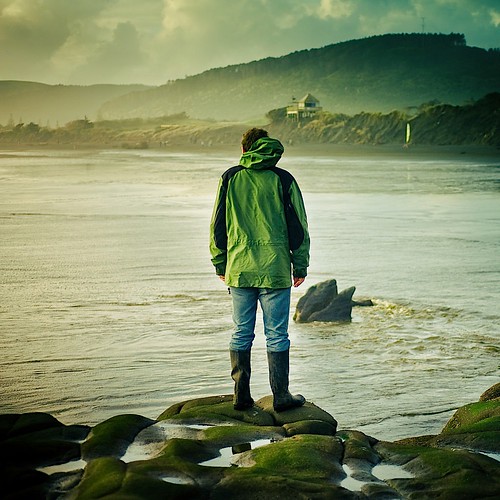
Cuba Gallery: New Zealand / portrait / green / ocean / landscape / sea / beach / man / photography by ►CubaGallery


photo source


Photography isn't just about making memories, it's about art. Be artistic. Here are a few tips and tricks to help you make those photos, picture perfect.

To make those dull photos turn into works of art, consider these questions:
Decide if you want the full subject, half, or even a close up. How much background do you want, or even foreground? Exactly how close do you want that close up? What details do you want to focus on? Do you want a vertical, horizontal, or tilted photograph? What angle do you want? What's the best lighting? What background do you want to use?

1. Placing the subject of interest. Choose how much of the subject you want photographed. (Example: you want full body, half body, or face shot.) If your subject fills the frame then it's okay to center it. If you are trying to get more of the background, try placing your subject to the right or left in the viewfinder. With a horizontal (laying down), try to place them at the top for more foreground, or at the bottom for more background. And you could even tilt the camera for a more funky picture. It all depends on what part of the scenery you want visible in the picture. Maybe you want that tree to your left and your subject to the right. Or the patch of flowers in front and the mountains in back. (I find it best to take my time and take shots of each possible way and several different poses. This way I know I'll find the best photograph with the most potential.)

2. Don't center. The circle, plus sign, or brackets in the middle of your viewfinder is for focusing and isn't necessarily for centering the subject. Placing your subject in t he circle could leave you with a lot of empty and useless space on your photograph. Too much background and not enough subject. If your subject fills the frame then it is okay to center them. (Sometimes you just have to ignore the focus points and concentrate on your subjects placement in the frame instead.)

3. Camera angles. Walk around the subject, shoot from all angles and sides. This will help you to get the best lighting, background, and different aspects of the subject. You will want to find the best angle for all three. Pick a background that will not distract your viewers from the subject of interest. (I choose my backgrounds to where there's not much clutter. Sometimes I will use a plain sheet or blanket and place it behind the subject, but making sure it does not clash or blend.)

4. Reflectors. In some situations you just can't get enough light or you perhaps you just want more. To use a light reflector, place it in a position where it reflects light onto the subject without it getting in the frame. Use this if your shot is coming out too dark or there are too many shadows. On night shots that you need more than your flash can put out, place a lamp (or several) near your subject, but out of sight, and use the light reflectors to bounce from the lamps to where needed. (Some homemade light reflectors can be real cheap to make. You could use white cardboard, or if you can't find this, then simply take any piece and paint it white. For more light, place tin foil over your piece of cardboard, smooth it out, and reflect where needed.)

5. Shading. Using the same piece of cardboard as mentioned above, you can use this to block the light as well. You could make this easier by painting one side white and the other black. Or just place the piece in front of the lamp or sun to dismiss light from your subject. On most cameras you can use a sunshade for the lens, some cameras come with this, some you buy separate. This won't keep light from your subject, but it will block the light from causing a flare effect on the outcome of your photograph. The sunshade just clicks into place around your lens, and keeps the lens safe from any glaring.

6. Outside daylight. Direct sunlight is when you place the sun behind the camera, but in front of the subject. Using direct sunlight can cause shadows on the subjects face and possibly their eyes squinting. Back light is when the sun is behind the subject and in front of the camera. This will lighten the photo and cause much softer features on the subject.

7. Preventing red eye. Red eye is caused when the flash is too close to the lens. Ways to prevent this are: Attach a larger flash to your camera, t his way the flash is further from the lens. Or if buying a camera, look for one with the flash located far from the lens. Try getting closer to your subject when needing the flash. (Before I bought my camera with built in red eye correction, I had to use a photo editing program to correct these problems. I was even scanning my pictures and still having to edit when I was using my film camera that was hopeless against red eye.)

Saturday, February 26, 2011

Blair Hill Photography in Salt Lake City, Utah


Photography Desk by billread


credit,photo source


Blair Hill Photography services the Wasatch Valley areas locating between Provo to Logan Utah.

Blair Hill Photography began in the year 2000 when Blair first decided she wanted to use her camera for something other than fun. Though Blair had been taking photographs for a long time, and was very familiar with the SLR camera she owned, she was always just snapping photographs of family & friend adventures, music events, or other various events around the town. She had been published several times in her local newspaper and other various sources, but still never quite thought of the idea to go 'professional.'

When Blair decided that it was time to put her passion to work, she started to attend classes right away on her new favorite subject, so that she could learn as much as she could aside from what she already knew. She attended classes at her local community college, a local arts program, and MICA - Maryland Institute College of Art. She began developing her progressing in the field of musical/industrial photography, and developed a clientel very quickly.

To the downside of all the progress Blair had made with her work, in 2003 she moved 2000 miles across the county, which means her clients were not locals anymore. Discouraged, and looking for a refreshing moment in life, Blair took a break from her passion of photography until 2005. In 2005, Blair realized how much she missed doing what she loved most, taking pictures. She realized how much her focus of photography had changed though, and began to pursue portrait photography.

Since 2005, Blair has been an active portrait photographer in the greater Wasatch Valley in Utah. She has been complemented again and again on her wonderful work, with a repeat clientel that simply keeps growing and growing.

With astonishing photography, incomparable to any of the other local photographers here in Utah, yet still with the most amazingly affordable prices, Blair Hill Photography is completely unique, and perfect. Every day Blair is coming up with new ideas on how to make her work different, better. She is constantly attending trainings and schooling to further her educational background in photography, and to learn anything new she could possibly learn.

Her current creditinals include the following:

Anne Arundel Community College - 2001, Photography Certificate

Maryland Institute College of Art - 2002-2003 Photography Classes

Salt Lake Community College - 2006-current A.A. Photography Classes

In addition to her passion of photography, Blair has a B.S. In sociology from the University of Utah, and is currently working towards her masters in Gerontology. She hopes to one day mix her love for people and culture with her love and passion for photography.

To see Blairs work, please visit Blair Hill Photography by Clicking Here.


Budget Winter Wedding Photography Guide


Cuba Gallery: Wave / beach / ocean / sea / green / nature / people / Coney Island / New York / photography by ►CubaGallery


credit


Do-it-yourself wedding photography is an excellent way to save money, but it is important to plan the details. Chances are you probably know a few photography buffs who are willing to help with your wedding photos. Use this guide to make the most of their skills and generosity to get beautiful wedding pictures.

1. Recruit multiple friends or family members to help with the photographs.
Designating multiple people as photographer splits the workload and means the wedding pictures will reflect a variety of perspectives. Choose knowledgeable, reliable people who are experienced in digital photography.

2. Use a high quality camera.
Make sure the camera you choose is technologically capable of capturing your winter wedding memories. Varying lighting conditions and action scenes are no problem for a good digital camera.

3. Have backup batteries or a backup camera ready.
Be sure the camera you use is charged and have a backup battery or backup camera ready.

4. Bring extra memory cards.
With digital cameras, most people take a few photos then delete the bad ones. The quick pace of a wedding probably will not leave time to edit along the way. Besides, pictures that are out of focus or unusual often have a unique beauty that is not immediately apparent. Bring extra memory cards to avoid missing a good shot.

5. Be very clear about what you want.
Research online and browse friend's wedding albums to get an idea of the type of poses and moments you want to commemorate. Make a list to be absolutely certain each milestone is photographed.

6. Get a mix of candid and posed shots.
A variety of photos best captures the spirit of the day.

7. Plan for the weather.
Depending on the wedding location, winter weather may mean it is too frigid to venture outdoors for a photo session. Plan to take group shots of the bridal party and family members indoors.

8. Edit the photos.
Try cropping and adding different special effects. Sepia and black and white pictures take on an elegant, timeless quality.

9. Order quality photo prints.
Since you saved so much on the cost of a photographer, invest in prints that use high quality paper and ink.

10. Make a wedding album.
You can use traditional photo prints to make a wedding album, but digital photos give you more options. A variety of book options, including hardbound books and small flipbooks, are available online and in many drug and discount stores.